
Canada stands at an inflection point in its energy history. The country that powered much of the 20th century with oil and gas now faces the complex task of transforming its energy infrastructure while maintaining economic stability and meeting climate commitments. By 2050, federal targets demand net-zero emissions, a goal that requires fundamental changes to how Canadians generate, distribute, and consume power.
The transition is already underway, though not always in the ways policymakers envisioned. Renewable energy capacity has grown substantially, with wind and solar installations accelerating across provinces. Yet traditional energy sources still dominate the grid and export revenues. This creates a paradox: Canada must simultaneously develop emerging sectors like hydrogen production and small modular reactors while managing the gradual decline of fossil fuel dependency that employs hundreds of thousands and generates billions in government revenue.
The path forward isn’t singular. Atlantic Canada is positioning itself as a hydrogen export hub, leveraging offshore wind potential. Alberta is investing in carbon capture technology while diversifying into renewables. Ontario and Saskatchewan are pursuing small modular reactors to provide stable baseload power. British Columbia continues expanding hydroelectric capacity. Each region is crafting its own energy future based on geography, existing infrastructure, and political will.
Understanding this transition requires moving beyond polarized debates about fossil fuels versus renewables. The reality involves parallel developments, competing technologies, shifting investment patterns, and policy frameworks that sometimes contradict each other. Some predictions from five years ago have already proven overly optimistic, while unexpected technological breakthroughs have accelerated certain pathways.
This analysis examines where Canada’s energy sector is headed, grounded in current investment trends, technological capabilities, and policy commitments as of 2026. The question isn’t whether transformation will happen, but how quickly, at what cost, and with what trade-offs along the way.
The Legislative Foundation: How Net-Zero Commitments Are Reshaping Strategy
Canada’s approach to climate action shifted from aspirational to legally binding when Parliament passed the Net-Zero Emissions Accountability Act in June 2021. The legislation enshrined both the 2030 emissions reduction target and the 2050 net-zero commitment into federal law, creating what energy sector strategists call “irreversible policy architecture.” Unlike voluntary pledges that can shift with political winds, these statutory targets establish fixed coordinates that capital markets and project developers can plan around for decades.
The Act’s practical impact extends beyond symbolism. It requires the federal government to set five-year emissions reduction milestones, establish sector-specific plans, and report publicly on progress. For energy companies evaluating whether to invest in a new natural gas facility with a 30-year lifespan or pivot capital toward hydrogen production, this framework removes guesswork about policy direction. The question is no longer whether Canada will decarbonize, but how quickly and through which pathways.
This legislative foundation has already influenced capital allocation patterns. Projects incorporating carbon capture infrastructure, hydrogen-ready turbines, or grid-scale battery storage now carry lower regulatory risk premiums than conventional designs. Financial institutions evaluating energy sector loans increasingly require alignment with the statutory targets, effectively making compliance a condition for accessing competitive financing. When Saskatchewan announced its small modular reactor development or Alberta greenlit hydrogen hubs, both cited the federal accountability framework as validation for long-term planning assumptions.
The binding nature of these commitments also clarifies trade-offs. Meeting 2030 targets while maintaining energy affordability and security means some traditional resources will continue operating with emissions reduction retrofits rather than immediate phase-outs. The Act acknowledges this reality by focusing on net emissions, not absolute elimination of all fossil fuel activity by mid-century. For energy planners, this creates room to sequence the transition strategically rather than disruptively, though the clock remains unforgiving. Every year without significant infrastructure deployment makes the 2050 endpoint steeper to reach.
Traditional Resources in Transition: Oil, Gas, and the Adaptation Challenge
The Carbon Capture Opportunity
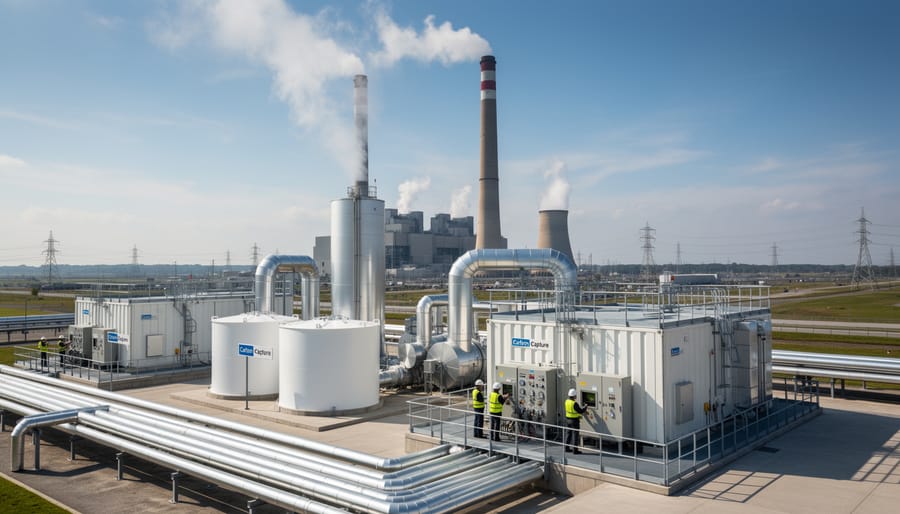
Alberta’s oil sands operators are betting heavily on carbon capture as their license to continue production in a carbon-constrained world. The Quest project near Fort Saskatchewan has already demonstrated viability, capturing over 8 million tonnes of CO2 since 2015 from Shell’s Scotford Upgrader and injecting it into deep geological formations 2 kilometers underground. That success has sparked a wave of proposals across the province’s heavy oil corridor.
The Pathways Alliance, representing Canada’s six largest oil sands producers, plans the most ambitious CCUS network in Canadian history. Their proposed system would capture CO2 from more than 20 facilities across the Athabasca region, transport it through a shared 400-kilometer pipeline, and sequester it in geological reservoirs northeast of Cold Lake. The companies estimate this infrastructure could capture 22 million tonnes annually by the early 2030s, roughly equivalent to removing 5 million cars from Canadian roads.
The economics hinge on two variables: carbon pricing levels and government subsidies. Ottawa’s investment tax credit covering up to 50% of CCUS capital costs has shifted these megaprojects from theoretical to feasible, though final investment decisions remain contingent on regulatory approvals and infrastructure partnerships. Saskatchewan’s coal-fired power sector is pursuing parallel initiatives, with the Boundary Dam facility pioneering early-stage capture since 2014.
Yet CCUS faces legitimate skepticism. Capture rates rarely exceed 90%, energy penalties reduce net output, and permanent storage carries monitoring obligations stretching centuries. This technology buys time rather than solving the transition puzzle outright.
Export Markets and Global Positioning
Canada’s traditional energy exports face a fundamental repositioning challenge: maintaining market share while meeting buyers’ evolving carbon expectations. The advantage no longer goes to the cheapest barrel or cubic meter, but to suppliers who can credibly demonstrate lower lifecycle emissions than competitors.
LNG development illustrates this shift. Projects like LNG Canada in Kitimat target Asian markets where natural gas displaces coal in power generation, creating a net emissions reduction despite being a fossil fuel. Canada markets this LNG as among the cleanest globally, pointing to BC’s hydroelectric-powered compression facilities and shorter shipping distances to Pacific Rim customers compared to Middle Eastern or Australian suppliers. Yet this positioning depends on infrastructure choices made now: electrifying compression, minimizing methane leakage throughout the supply chain, and proving these claims through transparent emissions accounting that buyers can verify.
Oil sands producers face steeper differentiation hurdles. While CCUS investments aim to reduce production emissions intensity, Canadian heavy crude still carries a higher carbon footprint than many conventional sources. The strategy centers on supplying refineries that value reliability and ethical sourcing over pure cost, particularly in the U.S. Midwest. As European and Asian refiners adopt carbon border adjustments and fuel standards that penalize high-emission sources, producers either cut emissions substantially or risk losing access to premium markets.
This race rewards first movers. Countries that credibly decarbonize their energy exports earliest will capture the shrinking pool of buyers willing to pay for lower-carbon supply, while latecomers face margin compression and stranded infrastructure.
The Hydrogen Economy: From Hype to Reality
Infrastructure and Export Potential
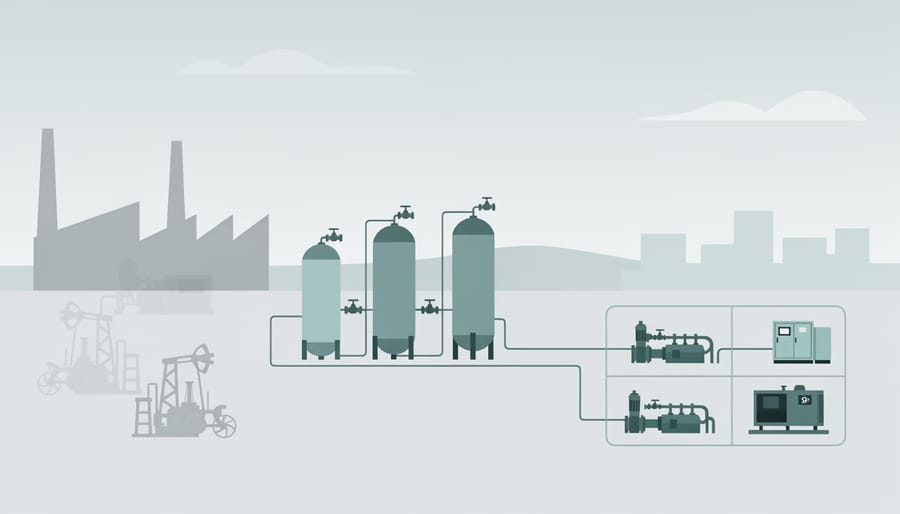
Canada’s hydrogen ambitions face a fundamental infrastructure reality: you cannot export what you cannot transport. Building the pipeline networks, storage facilities, and marine terminals required to move hydrogen at scale represents a multi-decade, multi-billion-dollar undertaking that will determine whether the investment in those 80 announced projects translates into actual export revenue.
The infrastructure challenge splits into domestic and international components. Domestically, hydrogen production hubs in Alberta, British Columbia, and Atlantic Canada will need dedicated pipeline systems or repurposed natural gas lines, along with underground salt cavern storage to buffer seasonal production variations. The existing gas infrastructure offers a head start, but hydrogen’s smaller molecular size and embrittlement effects on steel require careful engineering retrofits rather than simple conversion.
For export markets, Canada is pursuing ship-based transport using either liquefied hydrogen or ammonia as a carrier molecule. Japan and South Korea have both signed memoranda of understanding with Canadian provinces to develop hydrogen supply chains, viewing Canada as a stable democratic supplier preferable to geopolitically riskier alternatives. Europe represents a longer-term opportunity, though transatlantic shipping economics remain challenging compared to pipeline imports from North Africa or the Middle East.
The timeline matters: most export infrastructure won’t be operational until the early 2030s at the earliest, meaning Canada’s first hydrogen exports will likely be small demonstration shipments rather than the large-scale trade envisioned in strategy documents. Projects securing offtake agreements and finalizing port infrastructure today will capture first-mover advantages in what remains a globally competitive race.
Renewable Energy Expansion: Regional Strengths and Constraints
Grid Modernization and Storage Solutions
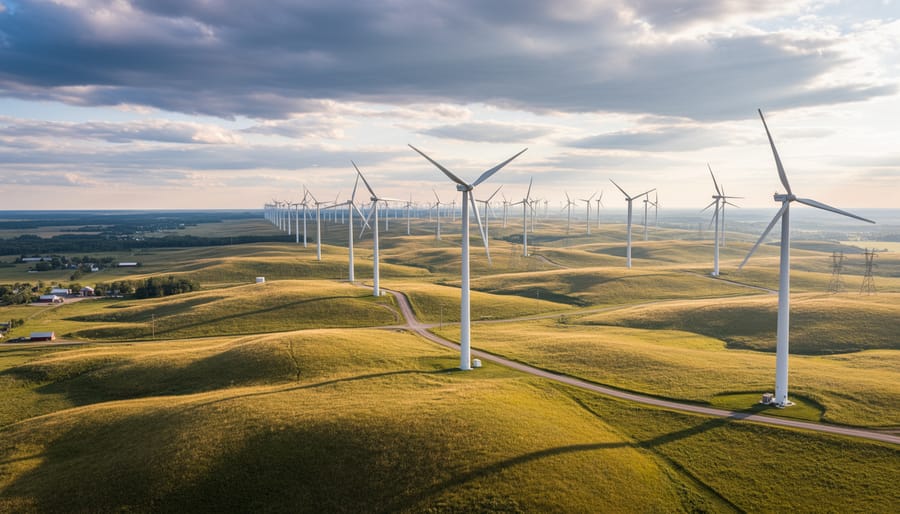
Canada’s grid wasn’t designed for what’s coming. Built around predictable baseload from hydro, nuclear, and fossil plants, the existing transmission infrastructure now faces a fundamental mismatch: wind and solar generate power when weather dictates, not when demand peaks. Integrating these intermittent sources at scale requires three parallel transformations, storage capacity, interprovincial connections, and intelligent grid management.
Battery storage represents the most visible piece. Lithium-ion installations are dropping in price, making four-hour duration systems economically viable for smoothing daily solar curves and capturing excess wind generation. Yet seasonal storage, bridging summer abundance to winter demand in provinces like Alberta, remains prohibitively expensive. Pumped hydro storage offers long-duration solutions where geography permits, though development timelines stretch across decades and face significant environmental assessment hurdles.
Interprovincial transmission creates the second critical layer. Quebec’s massive hydro surplus could balance Alberta’s wind variability, but the required high-voltage lines don’t exist. Provincial jurisdiction fragments planning, and multi-billion-dollar transmission projects struggle with cost allocation debates between beneficiary regions. Saskatchewan and Manitoba are exploring connections that would let wind-rich areas export to demand centers, yet permitting and construction timelines push meaningful capacity additions well into the 2030s.
Smart grid technologies provide the operational intelligence to orchestrate this complexity. Advanced metering, real-time pricing signals, and automated demand response can shift consumption patterns to match renewable availability. Grid-scale software now forecasts wind and solar output hours ahead, letting operators schedule backup generation more efficiently. These digital layers cost substantially less than new transmission lines, making them the fastest-deployable component of grid modernization, though cybersecurity concerns grow alongside connectivity.
The integration challenge isn’t theoretical anymore. It’s the bottleneck determining how quickly Canada’s renewable capacity can actually displace fossil generation.
Nuclear’s Second Act: SMRs and Existing Fleet Extension
Canada’s nuclear sector is staging a calculated comeback, driven by two parallel strategies that acknowledge both the urgency of decarbonization and the realities of infrastructure timelines. While aging CANDU reactors undergo life extensions to secure baseload power through mid-century, a new generation of small modular reactors promises to reshape nuclear economics and deployment flexibility.
Ontario leads this renaissance with pragmatic necessity. The province extended the life of its Pickering nuclear station to 2026 while refurbishing four Darlington units and planning similar work at Bruce Power, collectively representing the largest clean energy project in North America. These extensions preserve roughly 13,000 megawatts of carbon-free baseload capacity that Ontario’s grid cannot yet replace with renewables alone.
SMR development runs on a different track, with Ontario Power Generation and SaskPower positioning their provinces as North American testbeds. OPG’s Darlington site hosts a planned 300-megawatt grid-scale SMR using GE Hitachi’s BWRX-300 design, while Saskatchewan pursues smaller units suited to remote mining operations and northern communities currently dependent on diesel generation. The appeal extends beyond size: factory fabrication, passive safety systems, and modularity promise reduced construction risk compared to traditional gigawatt-scale reactors.
Yet this technology faces familiar nuclear headwinds. Licensing processes remain untested for these designs in Canada, supply chains need development, and public acceptance varies regionally. The economic case hinges on achieving cost reductions through standardization and volume production, benefits that materialize only after multiple units prove the concept.
Nuclear’s role in Canada’s energy future rests on threading a narrow path: keeping existing plants running reliably while proving SMRs can deliver on their promise of faster, cheaper deployment. Success would provide the firm, zero-emission power that makes aggressive renewable integration feasible. The question isn’t whether nuclear has a place in 2050, but whether the sector can execute both strategies simultaneously without the cost overruns and delays that have plagued previous nuclear builds.
Critical Minerals and the Energy Technology Supply Chain
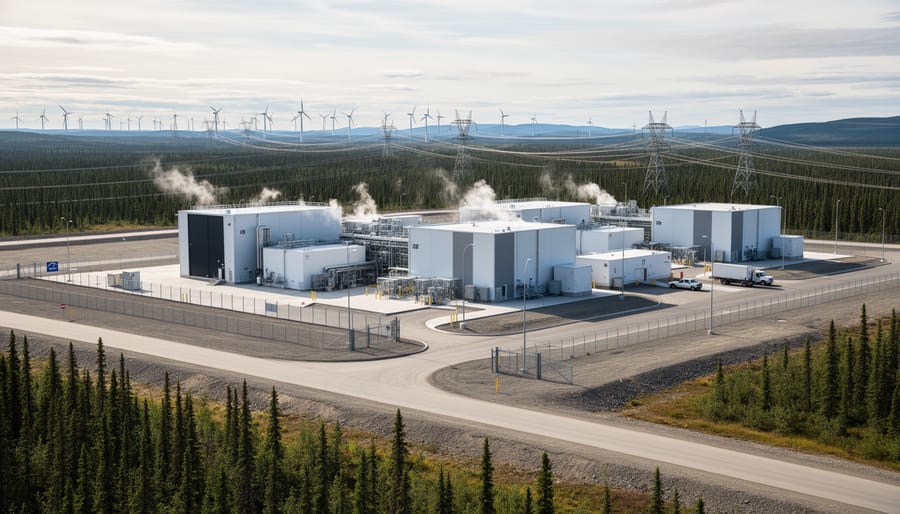
Canada’s clean energy transition creates demand for far more than wind turbines and solar panels. The real economic opportunity lies beneath the surface: critical minerals that form the backbone of every battery, electric motor, and renewable energy system. Canada holds significant reserves of lithium, cobalt, nickel, copper, graphite, and rare earth elements, the materials that determine who controls the clean energy supply chain.
Lithium and nickel anchor battery production for electric vehicles and grid storage. Cobalt stabilizes battery chemistry despite ethical sourcing concerns driving research toward cobalt-reduced alternatives. Copper threads through virtually every electrical component, from transmission lines to wind turbine generators. Rare earth elements enable the powerful permanent magnets in EV motors and offshore wind turbines. Without secure access to these materials, the energy transition stalls regardless of renewable capacity targets or hydrogen ambitions.
Canada’s geological advantage extends beyond simple reserves. Proximity to major North American manufacturing hubs reduces transportation costs and supply chain vulnerabilities exposed during recent global disruptions. Democratic governance and established environmental standards appeal to manufacturers seeking alternatives to jurisdictions with questionable labor practices or geopolitical risk. Several provinces possess both the mineral deposits and existing mining expertise to scale production rapidly compared to jurisdictions starting from scratch.
The economic multiplier extends well beyond mine gates. Downstream processing, refining raw ore into battery-grade materials, represents higher value capture than simply exporting concentrate. Recycling infrastructure for end-of-life batteries creates circular economy opportunities, recovering minerals from retired EV batteries and grid storage systems. Component manufacturing, whether battery cells or electric motor assemblies, potentially follows mineral supply, creating industrial clusters around resource hubs.
This positioning transforms Canada from energy exporter to technology enabler. While hydrogen and renewable electrons flow across borders, the minerals enabling that infrastructure create domestic manufacturing opportunities that outlast any single energy project’s lifespan.
Scenario Planning: Navigating Uncertainty
Canada’s energy system doesn’t follow a predetermined script. The Canada Energy Regulator recognizes this reality by modeling four distinct scenarios in its 2026 outlook, each exploring how different combinations of policy stringency, technology advancement, and economic conditions could shape the sector through mid-century. The Current Measures scenario serves as the baseline, assuming moderate economic growth, existing policies, and steady technological progress rather than breakthrough innovations.
- Current Measures
- Assumes moderate economic growth and energy prices, policies currently in place as of analysis date, and incremental technological improvements without major cost breakthroughs.
- Net Zero
- Models pathways to achieve 2050 emissions targets through aggressive policy implementation, rapid technology deployment, and significant behavioral shifts across all sectors.
- Global Net Zero
- Extends net-zero assumptions globally, examining how coordinated international climate action affects Canadian energy demand, export markets, and competitiveness.
- High Carbon Price
- Tests the impact of accelerated carbon pricing increases beyond current policy, creating stronger economic signals for low-carbon transitions.
Scenario planning matters because billion-dollar infrastructure decisions made in 2026 will operate for 30 to 50 years. A pipeline approved today, an SMR site selected this year, or a hydrogen export terminal planned now must perform across wildly different possible futures. Policymakers need these frameworks to stress-test regulations and support programs, ensuring they deliver value whether technology costs fall faster or slower than expected.
Three variables will determine which pathway materializes. Technology costs for renewables, batteries, and hydrogen production could drop faster than anticipated, accelerating transitions, or plateau, extending the role of traditional resources. Global demand for Canadian energy exports depends on how aggressively other nations decarbonize and whether they prioritize Canadian LNG, hydrogen, or critical minerals. Policy evolution at federal and provincial levels will either amplify or dampen market signals, with regulatory clarity proving as important as carbon prices themselves.
The scenarios aren’t predictions. They’re analytical tools revealing pressure points where small shifts in assumptions create divergent outcomes, helping decision-makers prepare for multiple plausible futures rather than betting everything on one.
Canada’s energy transition isn’t a story of one energy source defeating another. It’s a managed evolution where traditional resources adapt alongside emerging technologies, creating a more complex but resilient energy portfolio. The path forward demands simultaneous execution across multiple fronts: extending nuclear facilities while deploying SMRs, reducing emissions from oil and gas production while scaling hydrogen infrastructure, expanding renewables while modernizing the grid to handle them.
This complexity presents genuine economic opportunities. The hydrogen sector alone has attracted over $100 billion in announced investment across approximately 80 projects as of mid-2024, positioning Canada to supply international markets desperate for clean fuel alternatives. Critical minerals underlying clean energy technologies offer another growth avenue, leveraging geological advantages that took billions of years to create. Traditional energy exports won’t disappear but will increasingly compete on carbon intensity rather than volume alone.
The challenges are equally real. Grid integration of intermittent renewables requires infrastructure upgrades that take years to permit and build. CCUS technologies need to prove commercial viability at scale, not just in pilot projects. Provincial energy systems remain fragmented, complicating the coordinated planning that a national transition demands. Technology costs and global market dynamics will determine which scenario materializes, making flexibility more valuable than rigid forecasts.
Canada enters this transition with distinct structural advantages: abundant renewable resources, nuclear expertise, established energy infrastructure, and access to capital. The question isn’t whether the energy landscape will transform but whether Canadian policymakers and industry can navigate the portfolio approach required. Managing this diversification successfully means maintaining economic prosperity and energy security while meeting climate commitments, a balance that defines Canada’s energy future through 2026 and beyond.