
Energy emerging technology refers to innovative energy systems, devices, and processes that have moved beyond the laboratory stage but haven’t yet achieved full commercial maturity or widespread market adoption. These technologies occupy a critical middle ground: proven enough to attract serious investment and pilot deployment, yet still evolving in efficiency, cost-effectiveness, and scalability.
For Canada, understanding this distinction matters profoundly. The country stands at an inflection point where decisions made today about which emerging technologies to support will shape Canada’s energy future for decades. Unlike mature technologies such as hydroelectric dams or conventional natural gas plants, emerging technologies carry both higher risk and transformative potential. They promise to address pressing challenges: decarbonizing heavy industry, integrating variable renewables into the grid, reducing dependence on fossil fuel imports, and creating high-value jobs in advanced manufacturing.
The landscape of emerging energy technology in 2026 is remarkably diverse. It spans next-generation nuclear reactors the size of shipping containers, grid-scale batteries that store wind power for weeks, hydrogen production systems powered by renewable electricity, and carbon capture installations that prevent emissions from reaching the atmosphere. Some technologies are entering commercial deployment in specific sectors. Others remain confined to demonstration projects, waiting for regulatory clarity or cost reductions.
This article clarifies what qualifies as emerging versus experimental or mature, explains the fundamental mechanisms behind key technology categories, examines how these innovations are being applied to solve real Canadian energy challenges, and assesses where each technology sits on the path from prototype to market reality. Understanding these distinctions equips professionals and policymakers to make informed decisions about technology adoption, investment priorities, and strategic planning in an evolving energy sector.
What Energy Emerging Technology Means for Canada
Energy emerging technology sits in a distinctive middle ground, innovations that have moved beyond laboratory curiosity but haven’t yet achieved widespread commercial deployment. In Canada’s energy sector, these are technologies proven workable at pilot or demonstration scale, showing clear pathways to larger-scale implementation while facing remaining technical, economic, or regulatory hurdles before becoming mainstream solutions.
The distinction matters because Canada invests billions in energy infrastructure meant to last decades. Confusing experimental concepts with deployable emerging technologies leads to poor resource allocation. Similarly, treating genuinely transformative innovations as though they’re mature technologies creates unrealistic expectations about timelines and costs.
Understanding where technologies fall along the development spectrum helps clarify their relevance to Canada’s energy transformation:
- Laboratory-Scale
- Fundamental research demonstrating scientific principles in controlled settings, typically years from real-world application. These experimental technologies show promise but lack proven viability outside research facilities.
- Pilot Projects
- First small-scale demonstrations in actual operating environments, testing whether laboratory concepts function under real-world conditions. Pilot stage reveals practical challenges and refines technical approaches before larger investments.
- Early Commercial Deployment
- Initial installations serving real customers or industrial processes, proving technical reliability while economics remain marginal without subsidies. Technologies at this stage work but cost more than established alternatives.
- Market Scaling
- Rapid expansion phase where costs drop through manufacturing scale and operational learning, approaching competitiveness with conventional technologies. Emerging technologies transition toward mainstream status during this phase.
What qualifies as “emerging” depends on three intersecting factors. Development stage means the technology has progressed beyond basic research to functional prototypes or early installations, small modular reactors deployed in remote communities qualify, while fusion reactors remain experimental. Market readiness involves demonstrated performance under realistic conditions with identifiable customers willing to adopt solutions once costs decline, grid-scale batteries fit here, unlike speculative concepts lacking clear applications. Scaling potential requires a credible pathway to manufacturing volumes and cost reductions that eventually compete with existing technologies without perpetual subsidies.
For Canadian energy planners, emerging technologies represent strategic opportunities requiring different approaches than either blue-sky research or proven infrastructure. They demand targeted policy support, patient capital willing to bridge the commercial gap, and realistic timelines measured in years rather than months or decades.
How Energy Emerging Technologies Work
Next-Generation Energy Storage
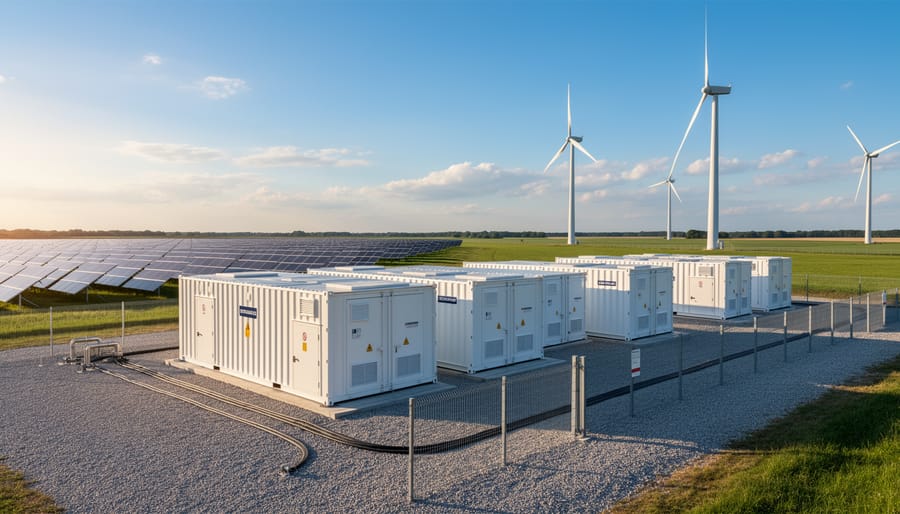
At the core of next-generation energy storage lies a fundamental engineering challenge: trapping energy when supply exceeds demand and releasing it when the situation reverses. Unlike conventional lithium-ion batteries, which shuttle ions through liquid electrolytes between layered electrodes, emerging storage technologies employ radically different mechanisms to achieve superior performance metrics, higher energy density, longer discharge durations, enhanced safety, or lower degradation rates.
Solid-state batteries replace flammable liquid electrolytes with solid materials (ceramics, polymers, or glass compounds), allowing lithium metal anodes that pack more energy into smaller volumes. The solid separator blocks dendrite formation, the needle-like structures that cause short circuits in liquid systems, dramatically improving safety and cycle life. These batteries can theoretically deliver 50-70% more energy per kilogram than today’s best lithium-ion cells, though manufacturing challenges around interfacial resistance remain.
Flow batteries take a different approach entirely, storing energy in liquid electrolytes held in external tanks. Vanadium or zinc-bromine solutions flow through an electrochemical cell where reduction-oxidation reactions occur. Because energy capacity scales with tank size rather than cell size, flow batteries excel at long-duration discharge (four to twelve hours), making them ideal partners for wind and solar farms that need to shift generation from midday or windy periods to evening peaks.
Gravity-based storage converts electrical energy into potential energy by lifting solid masses, concrete blocks, water, or rail cars, then recovering it through controlled descent. A Swiss system stacks 35-tonne blocks in a tower; when power is needed, descending blocks drive generators. The physics is simple, the lifespan extends beyond fifty years, and unlike batteries, performance doesn’t degrade with cycling.
Advanced Nuclear Systems
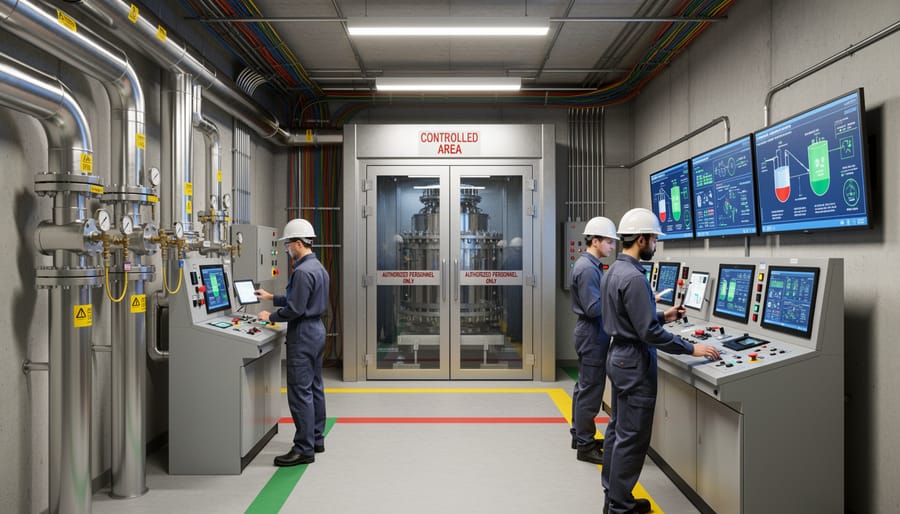
Small modular reactors (SMRs) generate electricity using nuclear fission, just like conventional reactors, but they’re factory-built in standardized modules rather than constructed on-site. The key difference lies in their size, typically producing 300 megawatts or less compared to 1,000+ megawatts from traditional plants, and their passive safety systems that rely on natural forces like gravity and convection rather than active mechanical pumps.
Most SMR designs use water as both coolant and moderator, though some advanced concepts employ molten salt or liquid sodium. When uranium fuel undergoes fission, it releases heat that boils water, creating steam to drive turbines. The compact core design means less fuel is needed, and the smaller inventory of radioactive material reduces potential consequences in accident scenarios.
Safety improvements come from inherent physics rather than engineered backup systems. If coolant flow stops, many SMR designs automatically shut down through negative temperature coefficients, the hotter the fuel gets, the slower the reaction becomes. Some models can cool themselves for days without external power by cycling coolant through natural circulation loops.
For remote Canadian communities currently burning diesel, SMRs offer a compelling alternative. Their modular construction allows them to be shipped by truck or barge to sites inaccessible for traditional reactor components. A single SMR can operate for years without refueling, and multiple units can be added incrementally as energy demand grows, avoiding the massive upfront capital commitment of conventional nuclear plants.
Carbon Capture, Utilization, and Storage (CCUS)
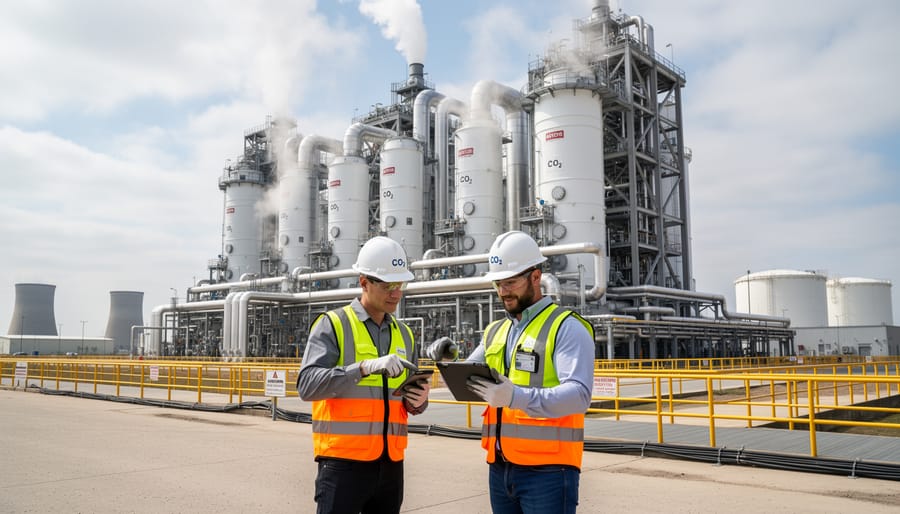
Carbon capture, utilization, and storage operates through three distinct technical stages. First, CO2 separation isolates carbon dioxide from industrial exhaust streams using chemical solvents (typically amines), membranes, or cryogenic methods. Post-combustion capture, the most common approach in Canada’s oil sands, applies chemical absorption after fuel combustion, where heated solvents release the captured CO2 for compression. Pre-combustion systems gasify fuel first, removing CO2 before burning, while oxy-fuel combustion burns fuel in pure oxygen to produce concentrated CO2 streams requiring minimal separation.
Once captured, compression systems pressurize CO2 to supercritical states (typically above 1,000 psi) for transport through pipelines to storage or utilization sites. Geological storage, the permanent option, injects supercritical CO2 into deep saline aquifers or depleted oil and gas reservoirs at depths exceeding 800 meters, where pressure and caprock formations trap it indefinitely. CCUS definition and roles outline how monitoring systems track migration and ensure containment integrity over decades.
Utilization pathways convert captured CO2 into commercial products rather than storing it. Enhanced oil recovery injects CO2 into aging reservoirs to extract additional petroleum while sequestering most of the gas underground, a technique widely deployed in Alberta’s oil sands. Emerging applications produce synthetic fuels, construction materials like concrete aggregates, chemicals, and even protein for animal feed. Canada’s oil sands operators are scaling CCUS to offset extraction emissions, with facilities like the Quest project near Fort Saskatchewan storing over one million tonnes of CO2 annually from hydrogen production.
Categories of Energy Emerging Technologies
Generation Technologies
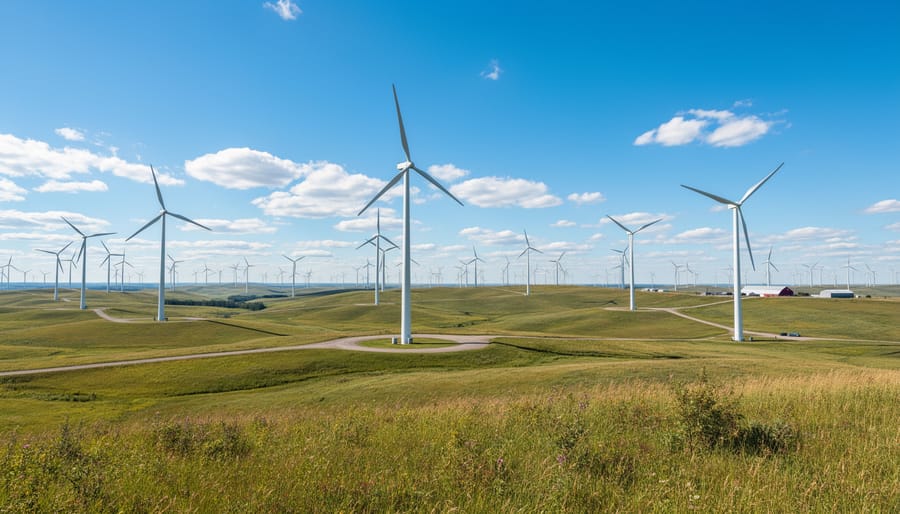
Canada’s vast geography offers distinct opportunities for emerging power generation technologies that move beyond conventional renewables. Offshore wind optimization leverages machine learning and advanced turbine designs to extract maximum energy from Atlantic and Pacific coastal winds, with floating platforms enabling deployment in deeper waters where fixed foundations aren’t viable. These systems adjust blade pitch and rotor speed in real-time based on wind conditions, improving capacity factors by 15-20% over static configurations.
Floating solar installations, photovoltaic arrays mounted on buoyant structures, are gaining traction for deployment on hydroelectric reservoirs and mining tailings ponds across northern regions. The water cools panels naturally, boosting efficiency by up to 10%, while the arrays reduce evaporation and algae growth.
Enhanced geothermal systems drill deeper than conventional geothermal wells, often 3-5 kilometres, and inject water into hot dry rock to create artificial reservoirs. This approach unlocks geothermal potential in areas like Alberta and Saskatchewan that lack natural hydrothermal resources.
Tidal and wave energy converters harness predictable ocean movements along Canada’s 243,000-kilometre coastline. Underwater turbines in the Bay of Fundy and oscillating water columns on the Pacific coast convert kinetic energy into electricity, offering baseload power that complements intermittent wind and solar generation.
Grid and Distribution Innovations
Smart grids replace aging one-way electrical infrastructure with sensor-laden networks that communicate in real time. Advanced metering infrastructure (AMI) tracks consumption patterns down to the appliance level, letting utilities balance load dynamically and consumers shift usage to off-peak hours when rates drop. In provinces like Ontario, smart meters already feed data to grid operators who reroute power around failures or congestion without manual intervention.
AI algorithms now predict demand spikes by analyzing weather forecasts, hockey game schedules, and historical usage curves simultaneously. These systems dispatch stored energy or throttle industrial loads milliseconds before peaks strain transformers, preventing blackouts that once required expensive peaker plants. Vancouver’s grid trials show AI reducing curtailment of rooftop solar by 30% through precise forecasting.
Bidirectional chargers turn electric vehicles into mobile batteries. A work truck plugged in at home overnight draws cheap power, then sells excess back to the grid during afternoon demand surges, the owner profits while stabilizing voltage. Pilots in Quebec demonstrate fleets of school buses offsetting diesel peaker plants during winter cold snaps, proving vehicle-to-grid (V2G) technology works at commercial scale when paired with time-of-use pricing.
Decarbonization Technologies
Green hydrogen, produced by splitting water molecules using renewable electricity in an electrolyzer, stands at the forefront of decarbonization efforts for sectors that can’t easily electrify. Unlike “grey” hydrogen made from natural gas, green hydrogen generates zero direct emissions during production. Canada’s abundant hydroelectric and wind resources position it to become a major exporter, particularly to markets like Europe and Asia. The technology’s primary challenge remains cost: electrolyzers need cheaper renewable power and economies of scale to compete with fossil-based alternatives.
Direct air capture (DAC) represents a more controversial frontier. These facilities use chemical processes, typically involving liquid solvents or solid sorbents, to extract CO2 directly from ambient air rather than from concentrated industrial exhaust streams. Once captured, the CO2 can be permanently stored underground or used to manufacture products like sustainable aviation fuel. While technically proven, DAC remains extraordinarily energy-intensive and expensive, typically costing $600-$1,000 per tonne of CO2 removed in 2026. Canada’s geology offers excellent storage sites, and projects in Alberta are testing commercial viability.
Industrial electrification replaces fossil fuel combustion with electric alternatives in manufacturing processes. Electric arc furnaces for steel production, heat pumps for industrial heating, and plasma torches for cement kilns exemplify this shift. The approach works best where clean electricity is reliable and affordable, an advantage for provinces like Quebec and British Columbia. The transition requires significant capital investment and grid capacity upgrades, but eliminates direct emissions from some of Canada’s largest industrial polluters.
Applications Across Canada’s Energy Landscape
Powering Remote Communities
Over 70 remote communities across Canada’s North still depend on diesel generators for electricity, an expensive, polluting legacy that creates energy costs up to 10 times higher than urban rates. Energy emerging technologies now offer viable pathways to break this dependency.
Small modular reactors present a compelling option for larger isolated communities. With outputs between 1-300 MW and passive safety systems that function without external power, SMRs can operate for years without refueling. Their compact footprint and factory fabrication reduce on-site construction challenges in regions where building materials must arrive by seasonal ice roads or barge.
Hybrid renewable microgrids combine wind turbines, solar arrays, and battery storage with backup diesel generation, progressively reducing fossil fuel consumption as storage capacity improves. Communities like Old Crow, Yukon have demonstrated 25% diesel displacement using wind-solar-battery systems sized to local demand patterns.
Advanced battery technologies extend these systems’ capabilities. Flow batteries provide 10+ hour discharge durations ideal for covering windless nights, while the falling costs of lithium-ion storage make previously uneconomic projects financially feasible. When paired with AI-driven load management, these systems optimize generation and storage to minimize diesel runtime while maintaining reliable power during extreme cold when electricity demand peaks.
Industrial Decarbonization Pathways
Canada’s heavy industries face a dual challenge: reducing greenhouse gas emissions while preserving the economic output that employs thousands and generates substantial export revenue. Energy emerging technologies offer pathways to square this circle, particularly in sectors where electrification alone won’t suffice.
In Alberta’s oil sands, operators are deploying carbon capture systems that strip CO2 from upgrading and refining processes before it reaches the atmosphere. Some facilities now inject this captured carbon into depleted reservoirs for permanent storage, while others are experimenting with converting it into synthetic fuels or building materials. Meanwhile, pilot projects test whether small modular reactors could replace natural gas boilers for steam generation, cutting both emissions and operating costs over the long term.
Steel production, which traditionally relies on coal-fired blast furnaces, is exploring hydrogen direct reduction. This process uses green hydrogen (produced via renewable-powered electrolysis) to chemically strip oxygen from iron ore, eliminating coal entirely. Although capital costs remain high, the approach produces steel with near-zero carbon intensity.
Chemical manufacturers are transitioning high-temperature processes to electric heating powered by renewable sources, a shift enabled by improved industrial heat pumps and thermal storage systems. These installations allow facilities to absorb excess grid power during off-peak hours and release that energy when production demands it.
The common thread across these pathways is maintaining output and jobs while fundamentally altering the energy inputs and emissions profile of Canada’s industrial backbone.
Grid Modernization and Reliability
Canada’s aging grid infrastructure confronts mounting pressure from distributed solar installations, electric vehicle charging, and variable wind generation. Energy storage systems now solve the duck curve problem, when solar production peaks midday but demand surges at evening, by capturing excess generation and releasing it during high-demand periods. Flow batteries and lithium-ion installations in Ontario and Alberta demonstrate how storage absorbs renewable spikes that would otherwise destabilize frequency.
Demand response platforms enable utilities to temporarily reduce consumption during grid stress by adjusting commercial HVAC systems, industrial processes, and smart thermostats. Toronto Hydro’s pilot programs cut peak demand by 12% during summer heat waves, avoiding the need for expensive peaker plants.
AI-driven grid management systems predict generation patterns, weather impacts, and consumption trends with unprecedented accuracy. Machine learning algorithms optimize power routing across interconnected grids, automatically rerouting supply when transformers fail or lines go down. These systems prove essential as future cities integrate microgrids, rooftop solar, and bidirectional EV chargers that turn vehicles into distributed storage assets. The result: fewer outages, lower curtailment of renewable generation, and grid infrastructure that adapts in real-time rather than relying on static planning models.
Investment, Deployment, and Market Readiness in 2026
Canada’s emerging energy technologies remain at varied stages of maturity, with significant gaps between technical promise and commercial deployment. While venture capital funding for Canadian clean energy startups reached approximately $2.1 billion in 2025, a substantial figure, most investments concentrate on late-stage demonstration projects rather than early-stage research. Government programs like the Strategic Innovation Fund and the Canada Growth Fund provide critical bridge financing, yet deployment timelines stretch longer than initially anticipated. Advanced battery storage and hydrogen production attract the most investor interest, while direct air capture and next-generation geothermal face steeper capital requirements and longer paths to profitability.
Regulatory frameworks present formidable obstacles despite recent improvements. SMR licensing processes, though streamlined compared to traditional nuclear approvals, still require 5-7 years from application to operation permit. Provincial electricity market rules often fail to appropriately value grid services provided by energy storage or demand response technologies, creating revenue uncertainty that discourages private investment. Carbon pricing mechanisms help justify CCUS economics in Alberta’s industrial heartland, but the broader energy transition requires coordinated federal-provincial policy that remains inconsistent across jurisdictions.
Infrastructure requirements compound deployment challenges. Hydrogen production at scale demands massive electrolyzer capacity and new pipeline networks, investments that won’t materialize without confirmed demand from industrial offtakers. Enhanced geothermal systems need specialized drilling equipment and geological surveys that extend project timelines by years. Grid modernization for bidirectional power flow and urban energy systems requires utility capital expenditures that ratepayer-funded models struggle to accommodate quickly.
Economic viability varies dramatically by technology and application. Offshore wind projects in Atlantic Canada approach cost-competitiveness with natural gas generation when financing costs stay below 5%, but smaller-scale innovations like tidal energy still require subsidies exceeding 40% of project costs. Industrial customers considering electrification face payback periods of 8-12 years without carbon pricing support, deterring adoption despite technical feasibility. The pathway to market scale depends less on technological breakthroughs than on financial de-risking mechanisms, streamlined permitting, and infrastructure co-investment that bridges the gap between demonstration success and commercial reality.
Strategic Implications for Canada’s Energy Future
Canada’s position in the global energy technology landscape will be determined by decisions made now, during what many analysts call a next decade shift in how energy systems function. The country faces both exceptional opportunities and meaningful risks as emerging technologies move from pilot projects to widespread deployment.
Competitive Positioning and Export Potential
Canada holds natural advantages in several high-growth technology areas. The country’s uranium reserves, nuclear expertise, and regulatory infrastructure position it to become a global SMR supplier, particularly for remote applications where Canadian companies have pioneered deployment models. Similarly, abundant renewable resources and existing hydrogen infrastructure create openings to lead the green hydrogen export market, especially to Asian economies seeking low-carbon industrial feedstocks.
CCUS represents another area where Canadian engineering firms have developed world-leading capabilities through oil sands applications. This expertise translates directly into international opportunities as heavy industries worldwide face decarbonization mandates.
Workforce and Skills Development
Realizing these opportunities requires deliberate workforce planning. The transition demands electrical engineers trained in power electronics for grid modernization, specialized nuclear technicians for next-generation reactors, and process engineers who understand both carbon capture chemistry and digital optimization. Many fossil fuel sector workers possess transferable skills, welders, heavy equipment operators, project managers, but targeted retraining programs must scale quickly to match deployment timelines.
Universities and polytechnics are expanding relevant programs, yet industry-education partnerships remain uneven across provinces. Companies that invest in apprenticeship programs and knowledge transfer from experienced workers will gain competitive advantages in securing qualified personnel.
Integration Challenges and Infrastructure Gaps
Emerging technologies rarely slot seamlessly into existing systems. Grid infrastructure built for centralized fossil generation needs expensive upgrades to accommodate distributed renewables and bidirectional power flows. Hydrogen deployment requires new pipeline networks or repurposed natural gas infrastructure. Remote communities need not just new generation assets but complete energy system redesigns including storage, controls, and maintenance capabilities.
Regulatory frameworks also lag technological possibilities. Permitting processes designed for conventional projects struggle with novel technologies, creating deployment delays that advantage jurisdictions with adaptive approval systems.
The risk isn’t technological failure, it’s strategic drift while other nations capture market share, develop supply chains, and set standards that Canadian companies must later follow.
Common Questions About Energy Emerging Technologies
The transition to energy emerging technologies raises practical questions for Canadian businesses, policymakers, and citizens evaluating how these innovations will affect their operations and daily lives. Understanding timelines, economics, and real-world implications helps clarify what to expect as these technologies move from development to deployment.
What makes a technology “emerging” rather than experimental or established?
Emerging technologies have proven their fundamental viability through pilots or early deployments but haven’t reached full commercial scale. They’re beyond the lab stage yet still require infrastructure buildout, cost reduction, or regulatory frameworks before widespread adoption.
When will these technologies become mainstream in Canada?
Timelines vary widely by technology type. Grid-scale battery storage and offshore wind are already scaling commercially, while green hydrogen and advanced nuclear may take another 5-10 years to achieve broad market penetration. Regulatory approvals, infrastructure investments, and project economics determine actual deployment speed.
Are energy emerging technologies cost-competitive with conventional options?
Some technologies like onshore wind and solar-plus-storage already compete on cost in many markets, while others such as CCUS and SMRs currently require policy support or carbon pricing to close economic gaps. Costs typically decline as production scales and learning curves accelerate.
How critical are these technologies for Canada’s net-zero targets?
Reaching net-zero by 2050 requires technologies that don’t exist at scale today. Emerging solutions for hard-to-abate sectors, seasonal energy storage, and industrial decarbonization fill gaps that efficiency and current renewables can’t address alone.
Can individual Canadians invest in or benefit from these technologies?
Investment opportunities range from publicly traded clean tech companies to community energy projects and green bonds. Consumers may see benefits through lower energy costs, improved grid reliability, and new employment in manufacturing, construction, and operations as these sectors expand.
What reliability concerns exist with emerging energy technologies?
Modern emerging technologies undergo rigorous testing before deployment, and many incorporate redundancy and advanced monitoring. The real challenge lies in integrating variable renewable sources, which storage and grid management innovations are specifically designed to address.
These questions reflect common uncertainty about how quickly change will occur and what it means for energy security, economic competitiveness, and everyday life. Most Canadians won’t directly interact with grid-scale storage or industrial CCUS systems, but they’ll experience cleaner air, more stable electricity prices, and new career opportunities as these technologies reshape the energy landscape. Businesses face decisions about when to adopt hydrogen fuel cells, upgrade to smart energy management systems, or invest in on-site generation and storage.
The path forward involves both patience and preparation. Technologies mature through iterative deployment, not overnight transformation. Companies and communities that understand the trajectory, engage with pilots, and build internal capacity position themselves to capture first-mover advantages as costs fall and markets develop. Those waiting for perfect certainty risk being left behind as competitors and jurisdictions move decisively.
Canada stands at a pivotal moment in its energy history. Energy emerging technologies aren’t distant concepts, they’re actively reshaping how we generate, distribute, and consume power across this country. From advanced nuclear reactors powering remote communities to carbon capture systems transforming industrial operations, these innovations address Canada’s unique challenges while creating economic opportunities.
The path forward demands more than passive observation. Strategic investment in technologies where Canada holds competitive advantages, such as SMRs, CCUS applications for resource extraction, and grid modernization for vast geographic distances, can position the country as a global leader rather than a late adopter. Supportive policy frameworks that balance innovation with safety, indigenous consultation, and environmental protection will determine how quickly promising technologies move from pilot projects to widespread deployment.
For professionals, this transformation creates demand for new skills and expertise across engineering, project management, and regulatory domains. Policymakers face choices that will echo for decades: which technologies to prioritize, how to structure incentives, and where public investment yields the greatest return. Citizens, meanwhile, will experience these changes through cleaner air, more reliable grids, and new employment opportunities in emerging sectors.
Canada’s natural resources, technical capabilities, and commitment to decarbonization create a foundation for leadership in the global energy technology landscape. The question isn’t whether these technologies will transform our energy sector, it’s whether we’ll shape that transformation actively or react to changes driven elsewhere. Engagement starts now.